The Women Who Carry Time
What Claire Fraser, Lady Mary Crawley and Violet Crawley teach us about strength, love and legacy.
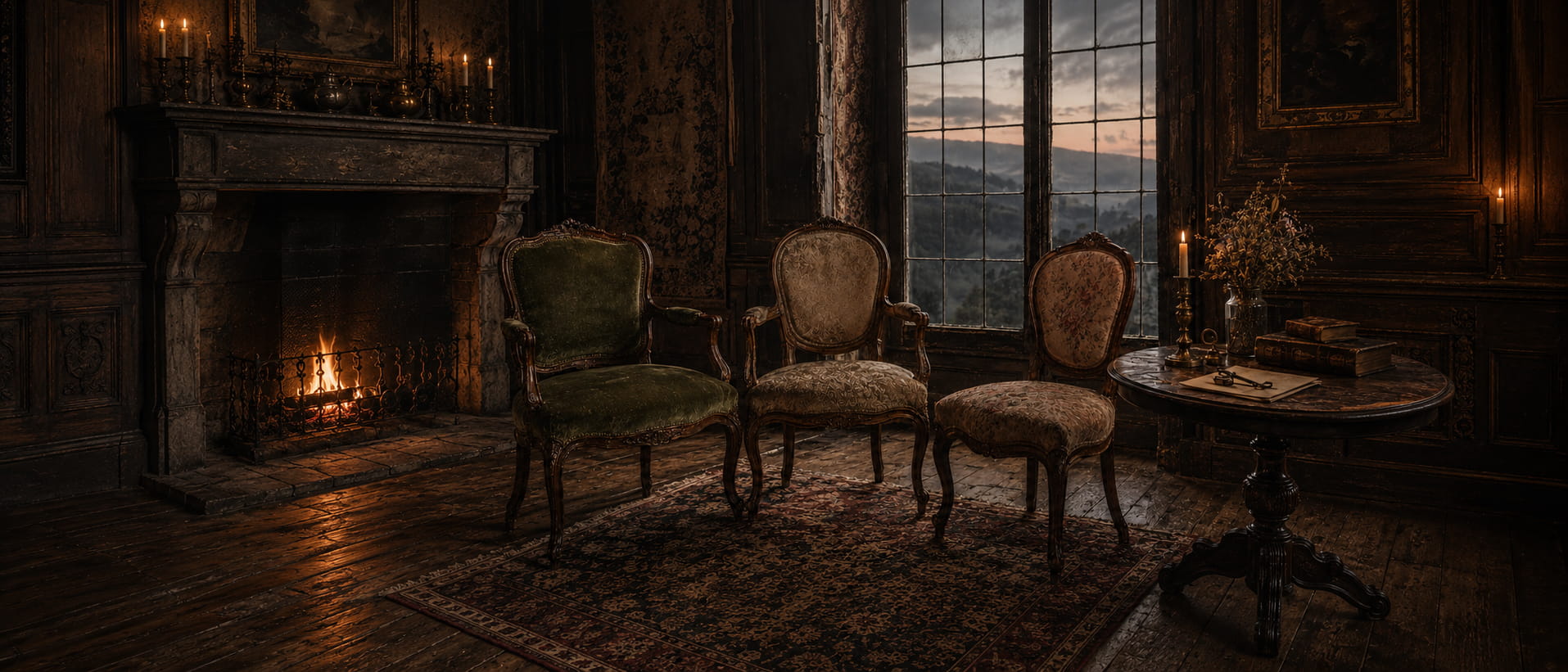
AI generated
Some women seem to belong to history. Others appear to carry history within them. Claire Fraser, Lady Mary Crawley and Violet Crawley do both.
I chose these three women because each carries a kind of strength I have long admired: Claire’s courage, Mary’s sense of duty and Violet’s constancy. Yet what moves me most is that their strength never stands apart from the rest of who they are. It is inseparable from love, responsibility and the quiet determination to protect what matters most.
At first, they seem to inhabit entirely different worlds. Claire moves through a life divided by centuries, carrying knowledge that does not always belong to the age around her. Mary stands at the threshold between inherited order and modern life, determined to preserve a home by accepting responsibility for its future. Violet has already lived long enough to understand that certainty, status and civilisation are far more fragile than people like to believe.
One is a healer. One is a daughter of the house who becomes its custodian. One is a matriarch whose wit can command an entire room. Yet beneath the landscapes, titles and costumes, they are connected by something more intimate. Each woman knows what it means to be tested by time. Each must decide how to protect what is good when circumstances change and how to remain faithful to the people, principles and duties that give her life meaning.
Perhaps this is why we return to them. We do not love them because they are flawless. We love them because their strength has a cost. Their dignity is not the absence of pain. It is the form they give to pain so that life can continue.
Three women, three kinds of courage
Claire Fraser possesses the most visible kind of courage. Hers is active. It reaches for the wounded, enters danger and makes a decision when hesitation would be easier. Her intelligence is practical, but never cold. Knowledge becomes meaningful to her when it can protect life. She moves through the restrictions of another century without ceasing to be a healer, a thinker or a wife. With Jamie, protection and dependence run in both directions: he protects her from dangers she cannot face alone, while her knowledge, courage and loyalty repeatedly sustain him.
Lady Mary’s courage is quieter and often misunderstood. She has learnt to hold her expression steady before she has had time to understand her own heart. Pride becomes both a shield and a burden. Yet beneath that composure is a woman who accepts responsibility when it would be easier to retreat into privilege. She does not merely inherit a world; she accepts the work required to preserve it. Love matters deeply to her, most clearly in the trust she shares with Matthew, but marriage never defines her entirely. She is also proud, exacting, vulnerable and determined to keep Downton alive.
Violet Crawley’s courage is the courage of perspective. She knows that families are rarely held together by perfect agreement. They endure because someone remembers the larger story when everyone else is trapped inside the present quarrel. Her sharpness is real, but so is her loyalty. Beneath her formidable elegance lies a woman who has spent a lifetime watching change arrive, sometimes unwanted and always unstoppable.
What unites them is not fearlessness or a desire to stand alone. It is constancy. They may bend. They may grieve. They may accept help, admit need and make mistakes. But they do not abandon their duties, their dignity or those they have promised to love.
AI generated
Love, loyalty and the bonds that sustain them
The most moving thing about Claire’s love is not only its intensity. It is its mutuality. She and Jamie repeatedly trust and rely on one another. At times he protects her; at times she saves him. Both are stubborn, both make grave mistakes and neither becomes merely an extension of the other. Their marriage endures because desire, loyalty, forgiveness and shared purpose survive separation, danger and time.
Mary is more guarded. Her love for Matthew grows through friction, respect and a shared concern for Downton. She does not surrender her judgement within love, nor does she remain untouched by loss. Her later choices are more complicated, and the story never presents marriage as a simple completion of her character. What remains consistent is her need for respect, her capacity for devotion and her refusal to offer affection lightly.
Violet belongs to a generation in which love is often expressed through duty. Affection arrives disguised as practical intervention, social protection or a perfectly timed act of loyalty. Her past and her private regrets reveal that she is not untouched by passion, but family remains the structure through which she most often acts. Her care is rarely sentimental. It is practical, protective and constant. She is the roof beneath which the emotional life of the family endures.
Together, these women offer three expressions of love: partnership, hard-won trust and steadfast guardianship. None of them mistakes self-sufficiency for strength, yet they do not conform to a single ideal. Claire’s marriage is central to her life. Mary’s loves and losses shape her without defining her entirely. Violet’s authority rests in family memory, duty and experience. In each story, attachment matters because it carries both comfort and cost.
Home is more than a beautiful house
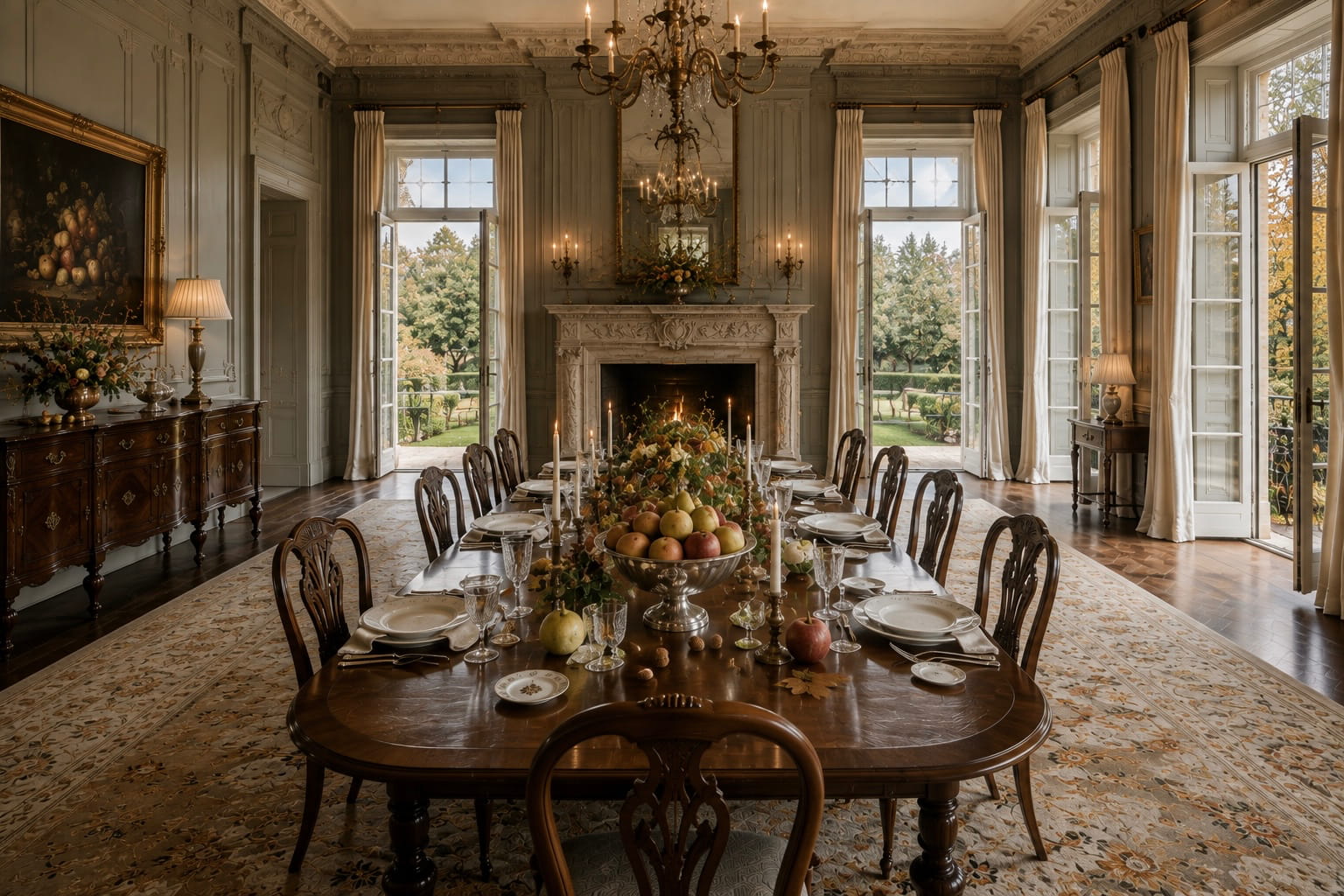
Historical drama often surrounds women with magnificent rooms, ancestral portraits and landscapes that seem untouched by time. Yet Claire, Mary and Violet reveal that home is never only architecture. A house becomes a home through memory, care and the decisions made when nobody knows what the future will bring.
AI generated
Claire understands home as something that may have to be chosen and rebuilt. Across centuries and continents, she and Jamie repeatedly try to make a life together. Yet home for Claire is never marriage alone. It also includes family, healing, purpose and the places they labour to create and protect together.
For Mary, home carries the weight of inheritance. Beauty is accompanied by obligation. To preserve a place is not simply to admire the past. It is to make difficult choices so that the past can remain useful to the living. Her attachment to home is therefore not passive nostalgia. It becomes work, stewardship and a promise to those who will come after her.
For Violet, home is the long memory of a family. She defends its rituals, rank and invisible rules because she believes continuity gives people a place of belonging. Yet she is more pragmatic than her manner first suggests. When family survival, loyalty or compassion demands it, she can adjust without pretending that the past has ceased to matter. She does not discard tradition; she interprets and protects it.
They know that grief changes a woman
None of these women reaches her strength without loss. Grief enters their lives in different forms, but it never becomes their only identity. This is one of the most honest gifts they offer the viewer. They show that surviving does not mean returning to the person one was before sorrow. It means learning how to carry a new self with grace.
Claire’s compassion is inseparable from her knowledge of how suddenly a life can be wounded. Mary’s reserve becomes more understandable when we recognise how often composure has been demanded of her. Violet’s wit carries the melancholy of someone who has watched people, customs and certainties disappear. Their strength is layered because their grief is layered.
They do not romanticise suffering. Pain does not automatically make a person noble. What matters is what they choose to do with it. They turn it into discernment, protection and a deeper capacity to recognise what is precious before it is gone.
Tradition, wisely carried forward
Claire brings the knowledge of one era into another and challenges customs she believes endanger human life. Mary belongs to a generation entrusted with keeping an old estate alive while its economic and social world changes. Violet is the clearest voice of inherited manners, rank and duty, yet even she can be practical when loyalty requires it. They are not traditional in the same way, and that difference matters.
Their different relationships with tradition remain deeply relevant today. We may love old houses, family rituals, beautiful manners and the dignity of things made to last because they teach continuity. The stories do not claim that everything old is wrong or everything new is wise. Instead, they ask what deserves to be preserved, what responsibility inheritance creates and how the living can remain faithful without becoming unable to act.
True heritage is not a museum in which nothing may move. It is faithful stewardship: receiving the past with gratitude, protecting its wisdom and passing it on with care. Yet each woman understands that duty differently. Violet begins with continuity, Mary with the survival of the estate and Claire with human need and conscience. Their differences keep tradition from becoming either a decorative fantasy or an easy enemy.
The grace of contradiction
Claire can be tender and fierce. Mary can be proud and deeply loyal. Violet can be severe and unexpectedly merciful. Their contradictions do not weaken them. They make them recognisably human.
These women do not confuse strength with isolation, but their bonds take different forms. Claire’s courage is inseparable from her marriage to Jamie, even when they disagree. Mary’s authority coexists with profound love and loss, but cannot be reduced to a longing for marriage. Violet’s formidable presence is shaped by family, duty, widowhood and private passions. Their strength lies partly in refusing to be reduced to something emotionally simple.
Their dignity does not come from rejecting every expectation placed upon them, nor from accepting each one without question. Claire acts from conviction, Mary protects what has been entrusted to her and Violet uses her authority in the service of family continuity. They are admirable not because they illustrate one perfect model of womanhood, but because love, loss, responsibility and contradiction never make them less recognisably themselves.
Why we carry them with us
We may first be drawn to the beauty of their worlds: the landscapes, the houses, the clothes, the rituals and the promise of another age. But beauty alone cannot explain why these women remain with us. We return because each one answers a private question.
Claire asks whether marriage and devotion can survive time. Mary asks whether inheritance, love and personal judgement can coexist. Violet asks whether age can deepen authority rather than diminish presence. Their answers are not simple, but hopeful.
They show that attachment and personal judgement can coexist. Claire relies on Jamie, and he relies on her. Mary loves deeply and still assumes authority at Downton. Violet defends tradition while sometimes adapting in order to protect her family. None of these qualities cancels the others.
AI generated
What they leave behind
Separated by time, temperament and circumstance, Claire Fraser, Lady Mary Crawley and Violet Crawley share one quiet promise: the world may change without separating a woman from her values, loyalties, family or the centre of who she is.
Legacy is not only a name, a house or a place in history. It is the courage we awaken in others, the tenderness we protect and the wisdom that remains in a family after the room falls silent.
Perhaps that is why we love them: they show us how to remain faithful when life asks much of us. Claire’s devotion, Mary’s stewardship and Violet’s constancy are not identical, yet each gives strength a human shape. They carry time, and in watching them, we begin to believe that we can carry it too.
Independent editorial note: This article is an independent work of cultural commentary. It is not affiliated with, authorised by or endorsed by the creators, producers, broadcasters or rights holders of Downton Abbey or Outlander. Character and programme names are used solely to identify and discuss the works concerned.