Why Fabric Matters More Than Fashion
AI generated
Fashion changes by the season. Fabric does not. Long before a garment carries a label, a silhouette or a price, it carries a material. That material decides how the piece falls, how it ages, how it feels against the skin at seven in the morning and at midnight. Everything else rests upon it.
The women whose wardrobes we admire most rarely follow trends. Their judgement begins with cloth. They know that a plain white shirt in dense cotton poplin will outlast a dozen embellished blouses in polyester, and that a pair of grey trousers in lightweight wool will retain their clean lines when every fast-fashion equivalent has surrendered to creases and pilling. Quality is not a style. It is a substance.
The Language of Cloth
Every natural fibre speaks its own language, and learning it is one of the most useful skills upon which an elegant wardrobe can rest.
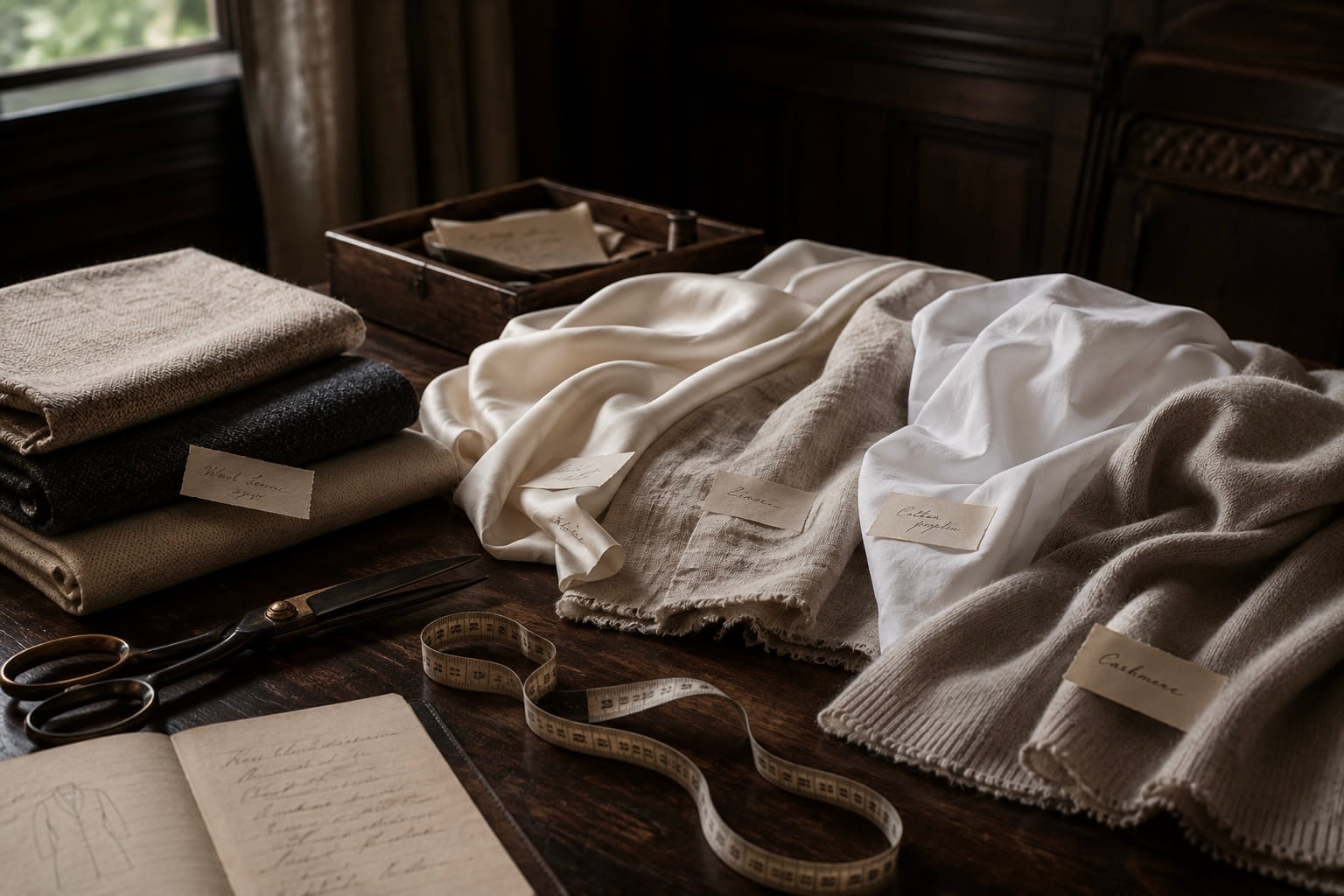
Wool is the foundation of tailoring for a reason. It holds its shape without stiffness, recovers from creasing overnight and regulates temperature with an ease most conventional synthetics struggle to imitate. A pair of wool trousers hung carefully after wear will often smooth themselves overnight. A pair of polyester trousers may resist creasing in the first place, but they regulate warmth less effectively, absorb far less moisture and do not drape with the same quiet authority.
Look for “100% wool” or terms such as “Super 100s” to “Super 130s” on suiting, which describe the fineness of the fibre. Beyond Super 150s, the cloth may become increasingly delicate, and fineness begins to compete with endurance. Fineness is not the same as durability.
Cashmere is judged not by its softness in the shop but by its behaviour after ten wears. Cheap cashmere is often made from short fibres that feel plush at first and pill within weeks. Fine cashmere, spun from longer fibres, can feel almost dry to the touch initially and soften with age. A two-ply knit will usually hold its shape more reliably than a single-ply one. The rule is simple: if a cashmere jumper costs the same as a cotton one, it will behave like neither.
Silk gives a garment its movement. It takes dye more richly than almost any other fibre, which is why a silk scarf in navy can appear deeper than the same navy in viscose. Weight matters here. Silk is measured in momme, and a blouse below 16 momme is likely to be sheer and delicate, while silk in the 19 to 22 momme range drapes with greater authority. Charmeuse shines, crêpe de Chine does not, and twill sits somewhere between. Knowing the difference is worth more than knowing this season’s colour.
Linen is honest. It creases, and it is meant to. The crease of good linen is soft and lived-in, never brittle or papery. Belgian and Irish linen are prized for the standards and skill associated with their production. At their best, both grow smoother and more supple with every wash. A well-made linen shirt is one of the few garments that can genuinely improve over many years.
Cotton rewards attention to weave. Poplin is crisp and formal. Oxford is textured and relaxed. Twill is dense and forgiving. The words “two-fold” or “double-twisted” on a shirt indicate yarns twisted together for strength and a cleaner surface. Sea Island refers to an extra-long staple cotton, Supima to certified American Pima cotton, while some of the finest Egyptian Giza varieties belong to the same class. The difference is often more apparent in the collar after fifty washes than it is in the fitting room.
AI generated
The In-Between Fibres
Between the natural and the synthetic sits a family of fibres many wardrobes contain without their owners quite knowing what they are. Viscose, modal and lyocell are made from cellulose, usually derived from wood pulp, transformed through chemical processing. They are neither traditional natural fibres nor petroleum-based synthetics, and they deserve to be judged on their own terms.
Viscose drapes beautifully and takes colour well, which is why it appears so often in blouses and dresses. Its weakness is resilience. Viscose loses strength when wet. Good-quality fabric can recover as it dries, while poorer-quality garments may twist after washing or begin to sag at the seams. If a viscose garment feels papery or unnaturally light, it may not survive its second summer.
Modal is a refined relative, softer and often more stable in the wash, which makes it a sensible choice for pieces worn close to the skin. Lyocell is generally the most robust of the three. Tencel, one of its best-known branded forms, is produced through a closed-loop process in which almost all of the solvent is recovered. A well-made lyocell dress can offer the fluidity of silk with considerably greater resilience.
The rule for this family is simple. Judge the garment by its weight, density and construction, not by the fibre name alone.
Acetate, often used for the glossy linings of jackets and dresses, requires a more careful judgement. It can offer an elegant drape and a smoother hand than polyester, but inexpensive acetate creases sharply, weakens under abrasion and tolerates heat poorly.
Why Synthetics Fail Quietly
Polyester, acrylic and their blends are not villains in every context. A small percentage of elastane in a pair of trousers is a practical mercy. The problem begins when synthetics form the body of a garment that pretends to be something finer.
Most everyday synthetic fabrics regulate warmth and moisture poorly compared with wool, linen or cotton, so they can hold heat and odour in equal measure. Technical sportswear is engineered differently, but the polyester blouse on the high street is not.
Synthetics rarely become more beautiful or acquire greater character with age. They scarcely soften, and they rarely develop the gentle traces of long use that make a garment feel familiar over time. They simply wear down. A wool coat at year ten has a history. A polyester coat at year ten has static.
The most reliable test costs nothing. Read the composition label before the price tag. A garment whose label is faintly printed, barely legible and hidden deep in a side seam often has a reason to whisper.
The Hand, the Drape, the Weight
AI generated
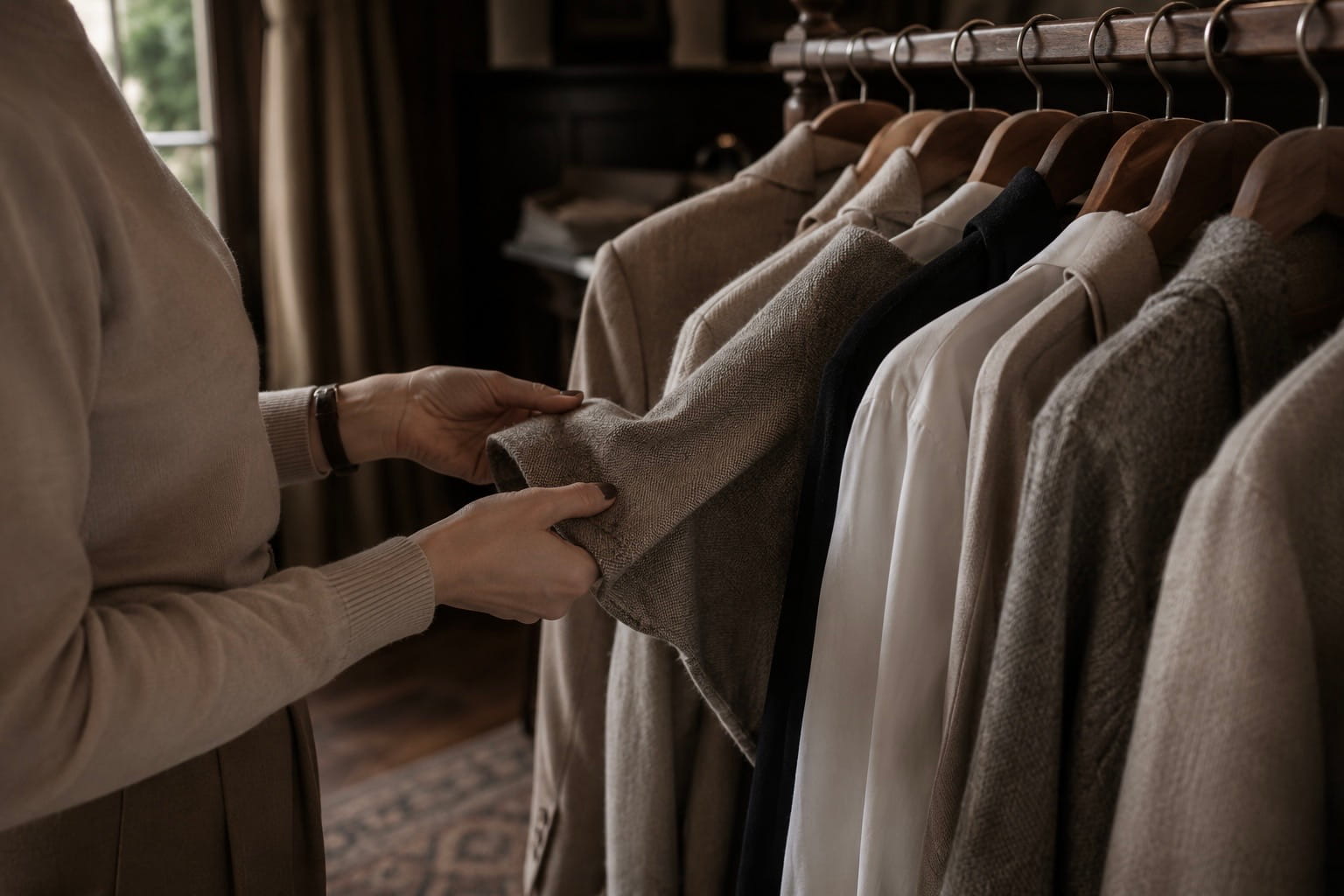
Three judgements can be made in under a minute, in almost any shop, without expertise.
First, the hand. Crush a corner of the fabric in your fist for five seconds and release it. Good wool recovers visibly. Good linen will crease, as it must, but the creases fall soft and organic rather than sharp and papery. Poor cloth of any fibre stays defeated.
Second, the drape. Hold the garment up by the shoulders and watch how it falls. Quality cloth falls in long, calm lines. Cheap cloth breaks into small, nervous folds.
Third, the weight. Pick the piece up before trying it on. A coat should feel like a decision. A knit should feel denser than it looks. Lightness is only a virtue when it is deliberate, as in fine silk or summer wool, and deliberate lightness never feels flimsy.
Value Beyond the Price Tag
The true value of a garment is revealed long after it has left the shop. It lies in how often it is chosen, how well it keeps its shape and whether, even after years, it still feels worthy of care and preservation.
A well-made coat does not merely survive several winters. It remains the coat one reaches for without hesitation. A good shirt is not valuable because it was expensive, but because it still sits correctly at the collar after years of washing. A fine knit earns its place by returning season after season without becoming tired, misshapen or disposable.
This is the quiet economy behind every enduring wardrobe. Fewer pieces, better cloth, longer lives. The result is not restraint for its own sake. It is the freedom of getting dressed without negotiation, because everything in the wardrobe deserves its place.
Composition Is Only the Beginning
A label can tell you what a garment is made from, but not how thoughtfully it has been made. Natural fibre alone is no guarantee of quality. A loosely woven wool may lose its shape, an inferior linen may twist after washing, and a fine cotton can still be undermined by careless stitching.
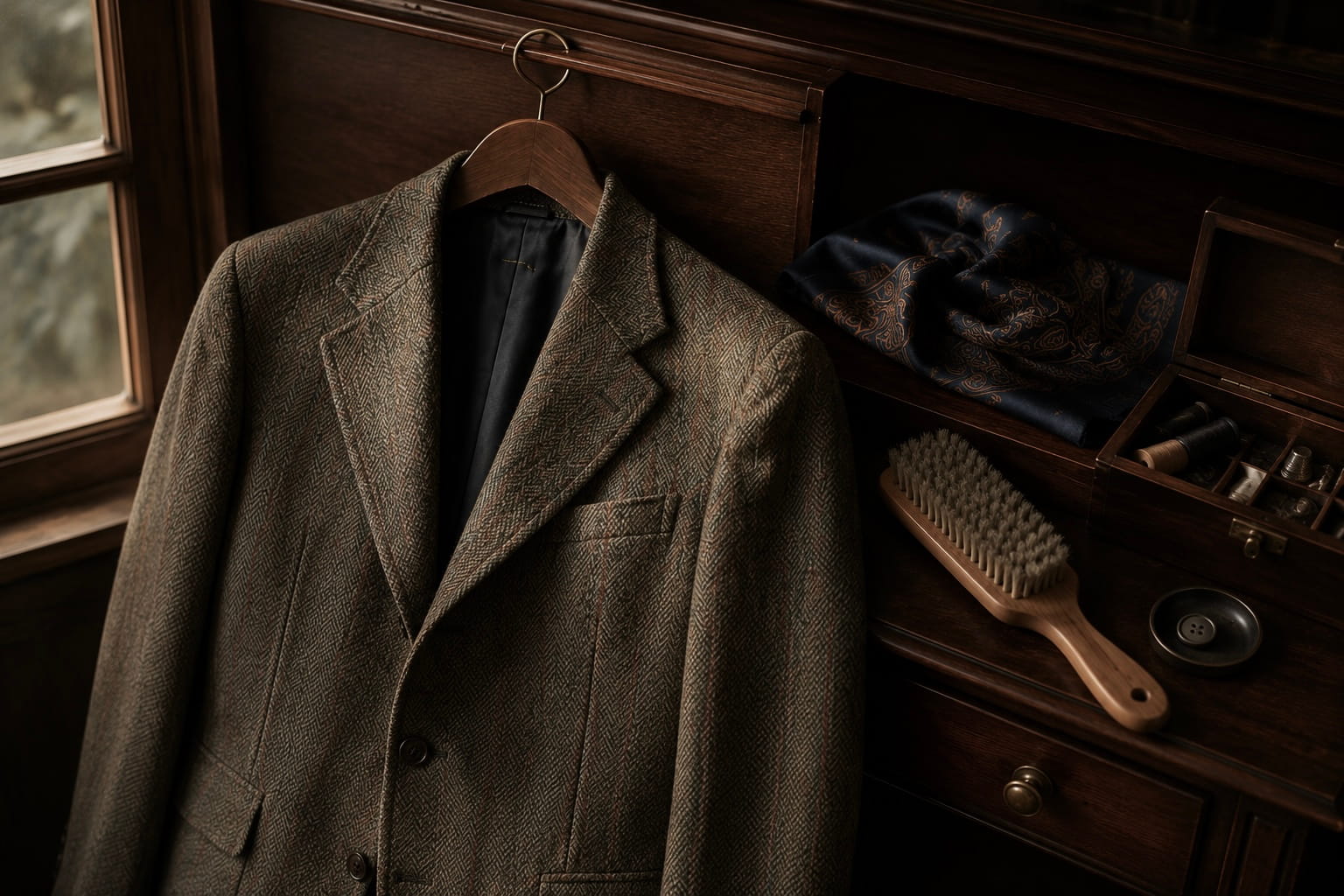
Look beyond the percentages. Examine the density of the cloth, the strength of the seams, the quality of the lining and whether patterns meet cleanly at the joins. A modest blend, chosen deliberately for structure or resilience, may serve a garment better than a poor fabric advertised as entirely natural. Composition matters greatly, but construction decides whether its promise is kept.
AI generated
For Your Own Library
Advertisement | Amazon affiliate links: Links marked with an asterisk (*) are affiliate links. If a purchase is made through one of these links, I receive a commission. This is at no additional cost to you. As an Amazon Associate I earn from qualifying purchases.
For anyone wishing to understand fabrics beyond the composition label, Textilepedia: The Complete Fabric Guide offers a comprehensive introduction to fibres, yarns, weaves, knitted fabrics and textile construction. Clearly illustrated and thoughtfully organised, it is particularly useful as a reference to return to whenever a material or technical term deserves a closer look.
Textilepedia: The Complete Fabric Guide*
Dressing for Decades
Trends are a conversation with the present. Fabric is a conversation with time. A herringbone wool blazer, a heavy silk blouse, a linen shirt washed soft over years: these pieces do not announce a season. They announce a standard.
Elegance has never been a matter of owning the newest thing. It is a matter of recognising the real thing, and the real thing always begins with cloth. Learn to read a composition label the way others read a designer name, and fashion loses its power to hurry you. What remains is style, and style, unlike fashion, is built to last.