The Thanksgiving Table I Have Yet to Set
An autumn gathering imagined through gratitude, beauty and the quiet art of making others feel at home.
AI generated
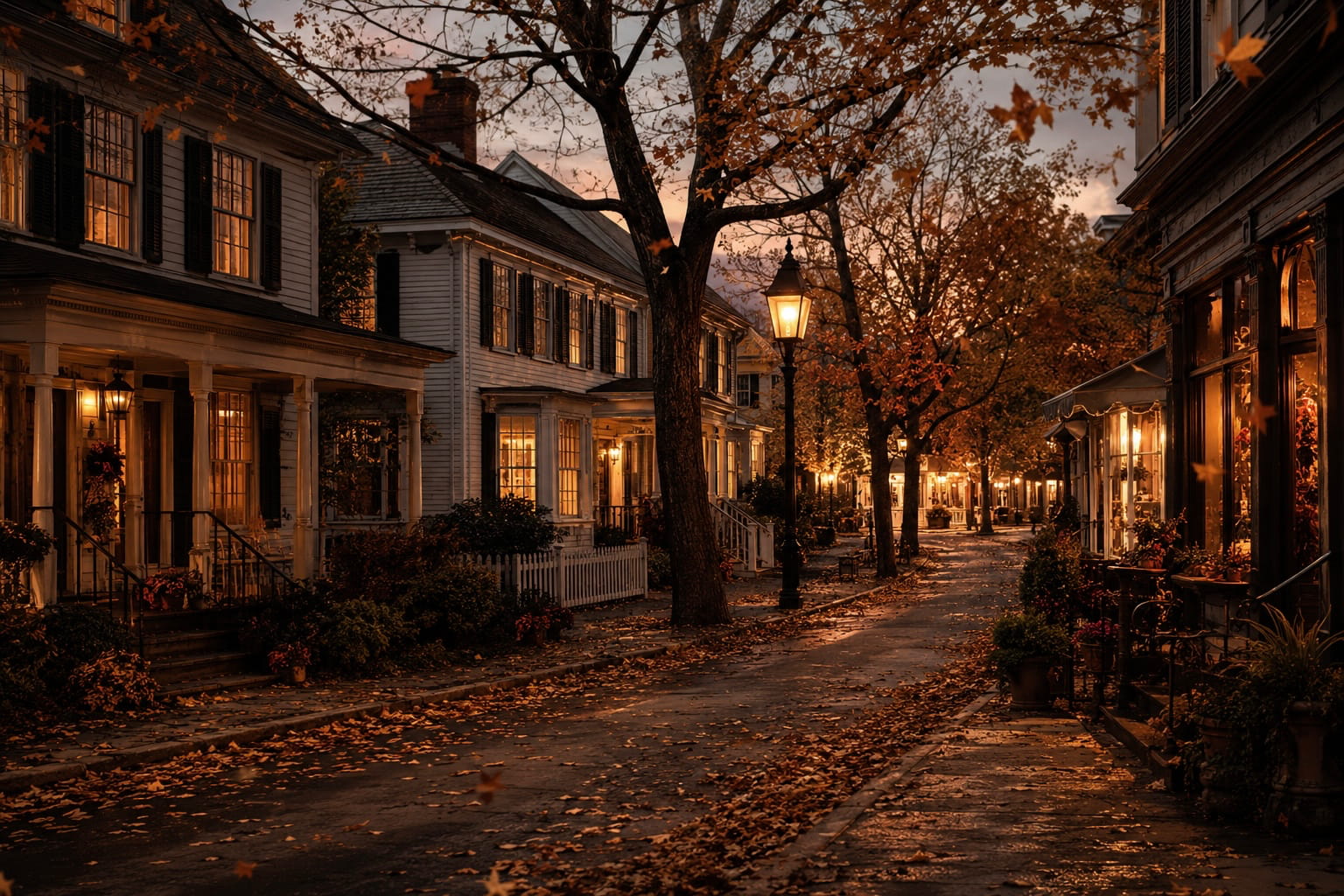
In my imagination, Thanksgiving has always belonged to a particular kind of autumn evening. The light fades early beyond the windows whilst lamps cast their warmth across the rooms. The dining table waits in careful order, and from the kitchen comes the scent of roasted herbs and warm apples, with something sweet still in the oven.
Autumn is my favourite season, and much of the atmosphere I associate with an American autumn first reached me through films and television. I think of leaves scattered across the streets of Stars Hollow, dinners held in the polished rooms of the Upper East Side, the immaculate houses of Wisteria Lane and the fields stretching beyond Smallville. These are the worlds to which I return when the days grow shorter. Their russet trees and wool coats belong to the season as naturally as the kitchens glowing warmly at dusk. More than anything, I return for the feeling of families gathering as night falls. Somewhere amongst those stories, Thanksgiving became part of the autumn atmosphere I came to love. It seemed to belong naturally to that world, arriving with the early darkness and the glow of a home from within as people drew closer around the table. In my mind, it gathered everything I love about autumn into a single evening. Warmth answered the cold outside, and the year seemed to pause while people came together.
It is not a celebration with which I grew up. No family recipes have been passed down to me, and no familiar November table appears in my childhood photographs. I have no inherited custom waiting to be continued. Perhaps that distance is partly why I have imagined it so clearly. When something does not yet belong to one’s memories, there is space to imagine how it may one day find its place amongst them.
AI generated
I know, too, that the history surrounding Thanksgiving is far more complex than the softened version that first reached me through television. I would never wish to turn that history into a decorative autumn tale or repeat a simplified legend. What draws me is the quieter meaning the day has come to hold for many families: pausing, gathering around a generous table and giving thanks for what the year has brought.
If I were to host Thanksgiving, I would approach it with that meaning in mind. I would want the evening to be beautiful and meticulously prepared, but never beautiful merely for appearance’s sake. Every polished glass, every folded napkin and every dish would have one purpose: to make the people entering my home feel that they had been expected, considered and cared for.
Before the Guests Arrive
Hosting would begin for me long before the first knock at the door. Every room would have been cleaned thoroughly, every surface cleared and each object returned to its proper place. Coats would have a designated place, fresh hand towels would be waiting and the kitchen would already be clear. Order has a quietness of its own, and I would want the house to possess it before anyone crossed the threshold.
The table would be finished several hours in advance. I would hold each glass to the light before setting it down, smooth the linen once more, align the cutlery and trim every candlewick. A chair standing slightly out of line would be corrected, as would the piece of silver that no one else would ever have noticed. Once the guests arrived, I would want nothing in the room to require my attention more than they did.
The gathering would begin in the late afternoon, just as daylight started to disappear. Lamps and a few candles would already be lit, while soft piano or classical music played quietly enough for conversation to remain the most important sound in the house. Autumn would be present in the scent of apples, sage and roasting vegetables rather than in an excess of decoration.
I would wear a long-sleeved dress in deep olive, chocolate or burgundy, paired with comfortable low heels, choosing an outfit that felt refined at the table while leaving me free to attend to every detail of the evening.
AI generated
The People at the Heart of the Evening
I would keep the guest list intimate, perhaps eight or ten people, so that nobody disappeared at the far end of a large table. The meal would unfold slowly, giving conversation time to deepen naturally as the evening went on. The loveliest conversations are rarely hurried.
The invitation would be simple: a small cream card, printed or written by hand, with the date, the hour and a request to come hungry. Before planning the menu, I would quietly make certain that I knew what each guest could and could not eat. I would also consider where everyone might feel most comfortable sitting and whether someone might prefer a quieter place at the table.
When they arrived, their coats would be taken immediately and a drink placed in their hands before they had to wonder what to do next. No guest should feel as though they were interrupting a busy kitchen or waiting for the hostess to finish preparing the room. From the moment they entered, I would want them to feel entirely welcome and at ease. Everything would already have been prepared with their comfort in mind, leaving them free simply to settle in and enjoy the evening.
A Thanksgiving Table in Autumn Colours
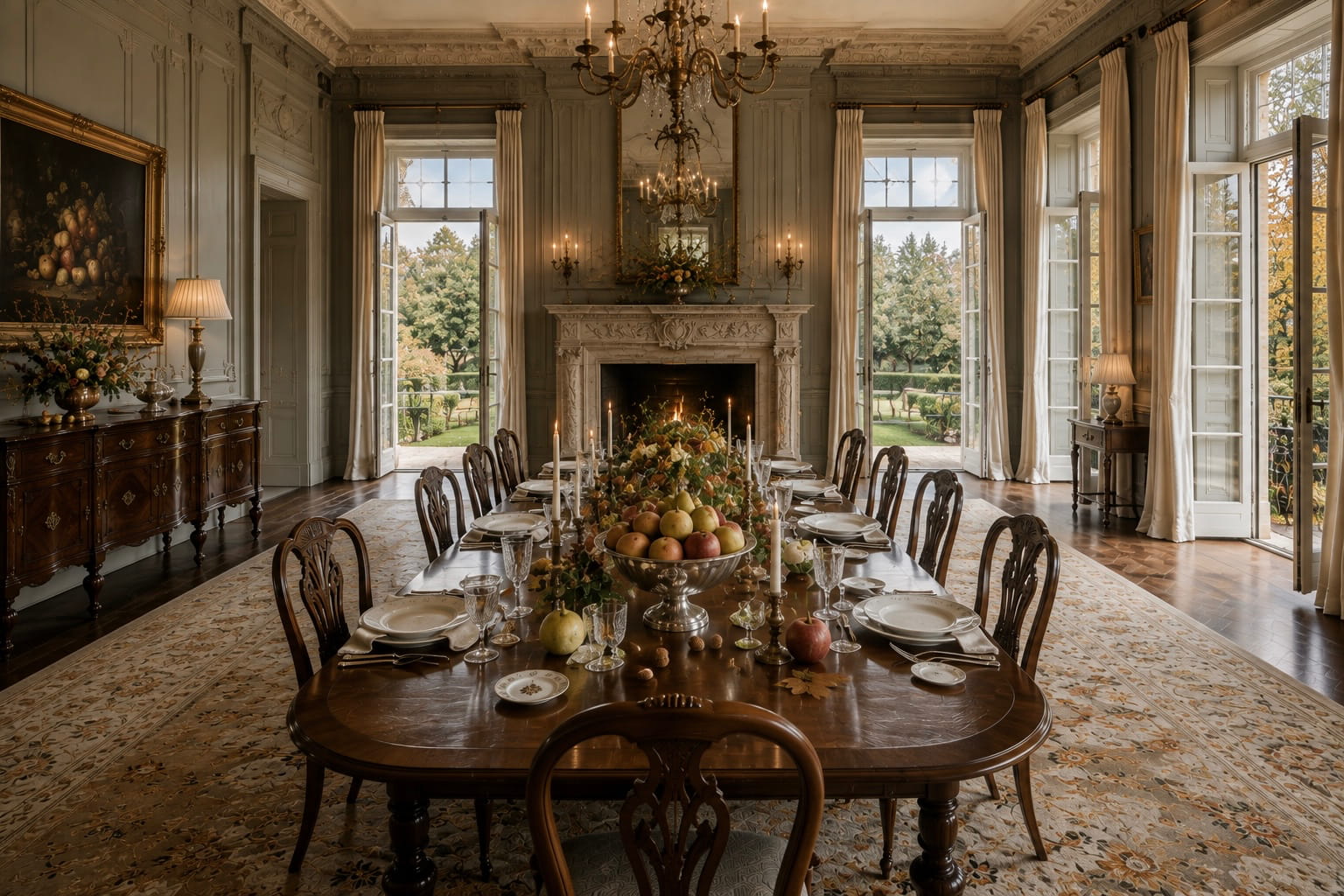
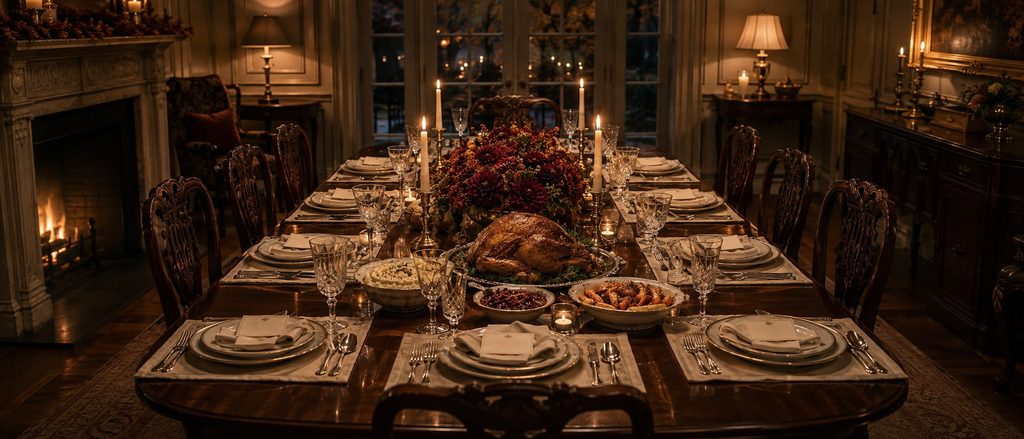
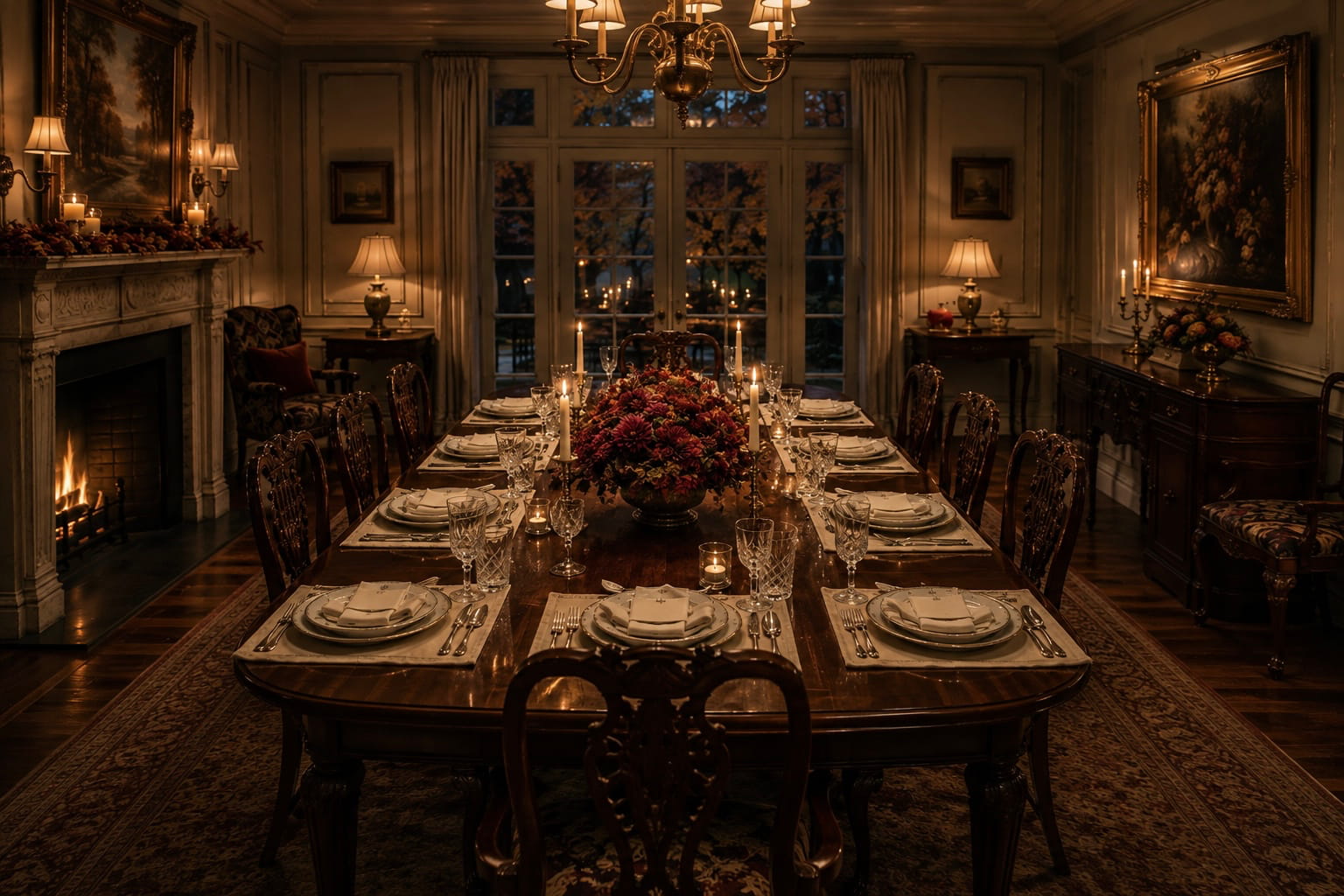
The table would be formal in its care, though not in its spirit. Carefully pressed linen in warm ivory or pale oatmeal would be joined by classic porcelain, polished cutlery, cut-crystal water glasses and generously sized cloth napkins. The palette would remain restrained: ivory, deep green, burgundy, walnut brown and the muted gold of candlelight.
At the centre, I imagine a low arrangement of burgundy dahlias, faded hydrangeas, garden roses, rosehips and dark autumn branches in an old silver bowl or shallow brass urn. It would appear abundant but controlled, never blocking one guest’s view of another. A few pears and walnuts might be arranged around it with the same restraint.
Tall ivory candles would bring height and symmetry. Every place would have a handwritten name card and a small printed menu, while each knife, glass and napkin would sit precisely where it belonged. The finished table would be composed and orderly, but it would still invite people to reach across it, pass a serving bowl and settle in for the evening. Precision would shape the setting; warmth would give it life.
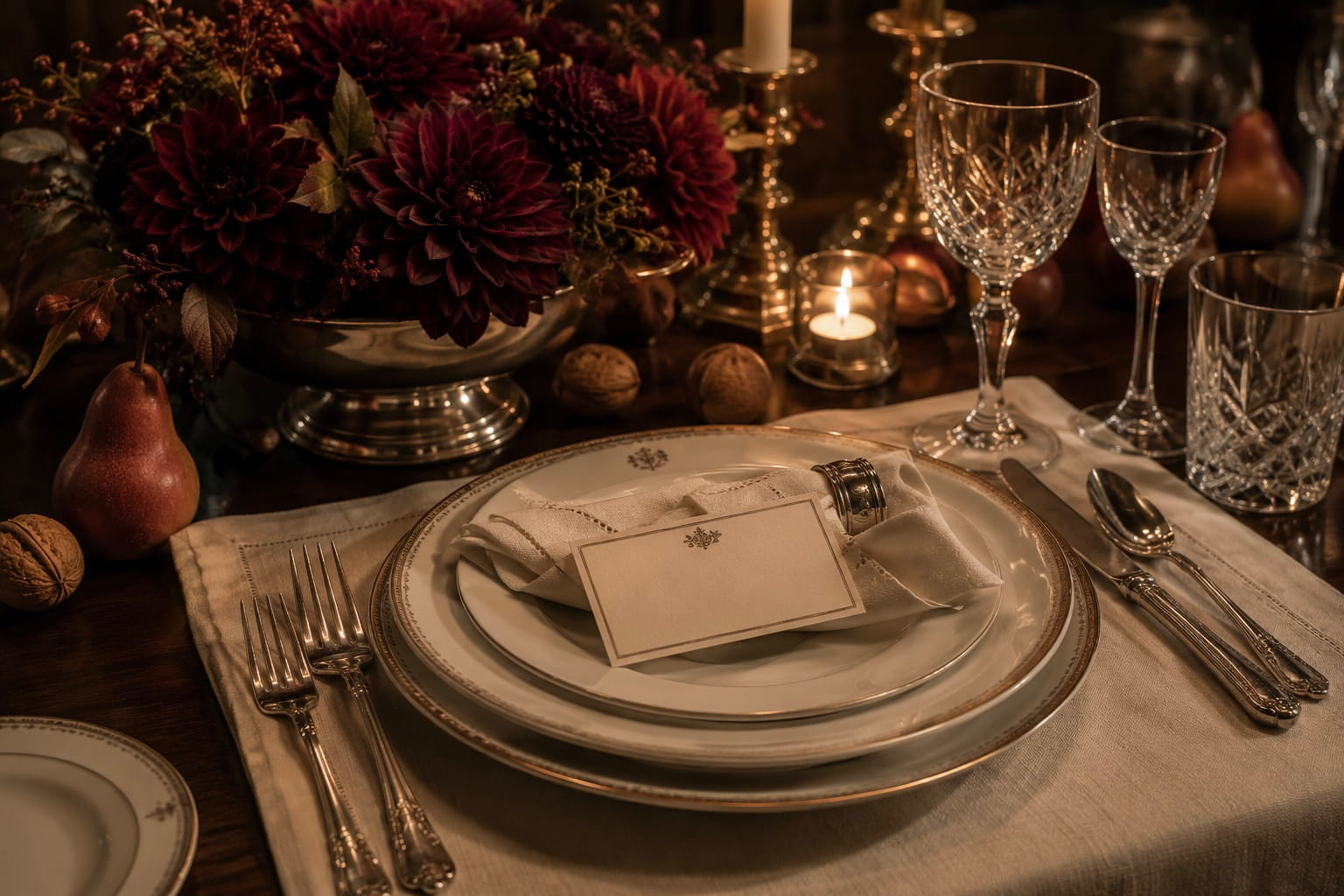
AI generated
The Menu I Would Serve
The menu would be recognisably Thanksgiving, generous enough to feel celebratory but considered enough that each dish had a reason to be there. I would rather prepare fewer things beautifully than fill the table with food that could not be appreciated.
• To welcome everyone: a sparkling apple, pear and rosemary cordial served in stemmed glasses, accompanied by warm rosemary crackers and toasted almonds.
• To begin: roasted squash soup with sage, toasted pumpkin seeds, black pepper and a small spoonful of cream.
• For the main course: a herb-roasted turkey with rosemary, thyme, garlic and butter; chestnut and herb stuffing baked separately until crisp on top; creamy mashed potatoes; roasted carrots and parsnips; green beans with toasted almonds; cranberry and orange sauce; rich gravy; roasted sweet potatoes with thyme; and warm dinner rolls wrapped in linen.
• For dessert: a delicately spiced pumpkin tart and an apple and pecan tart, both served with softly whipped cream.
• Afterwards: coffee, black tea and a gentle autumn infusion scented with cinnamon and apple.
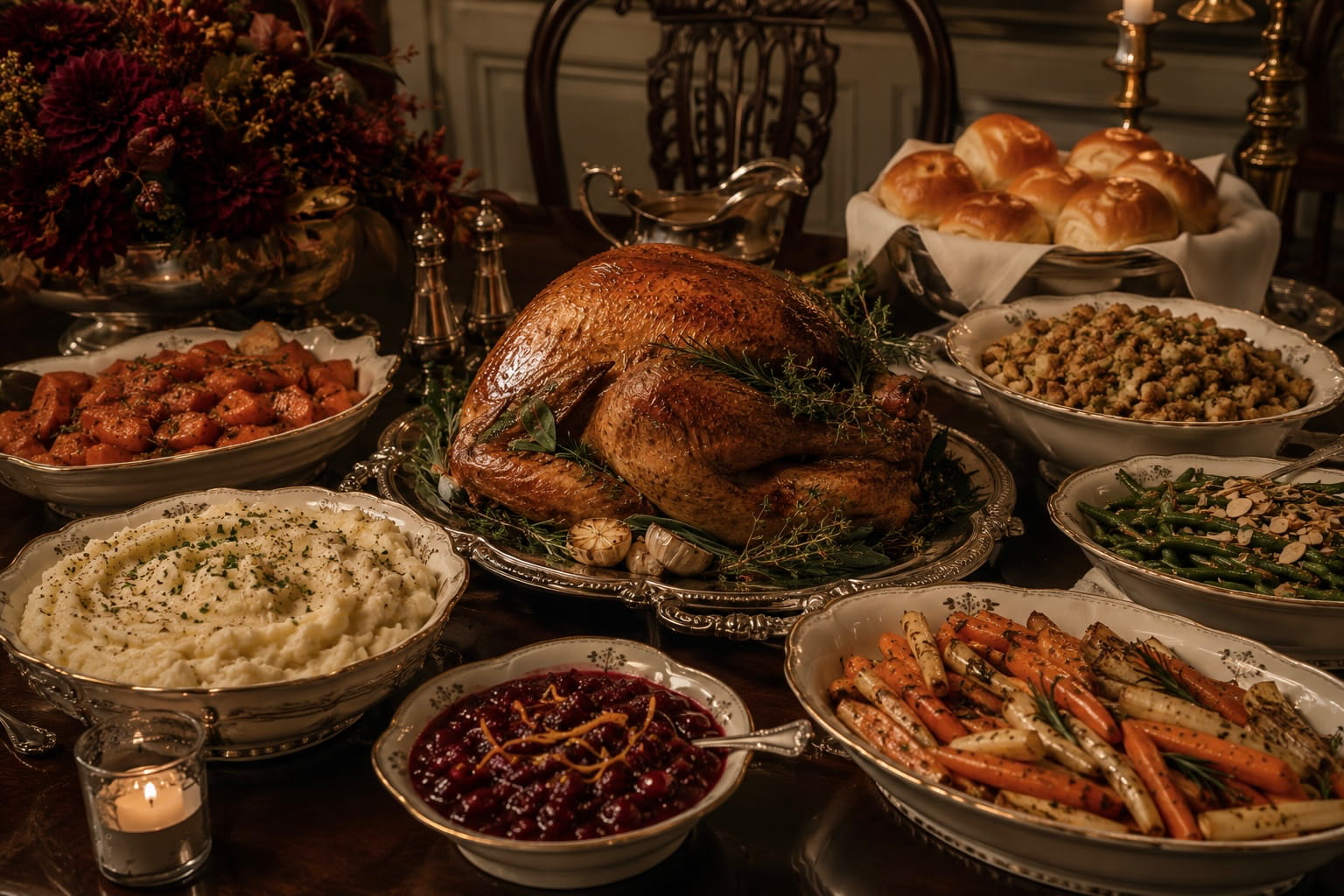
AI generated
The golden turkey, deep cranberry, green herbs and vegetables in shades of amber and russet would make the meal feel naturally seasonal. Everything would be arranged carefully on warm serving dishes, with each garnish placed deliberately and any mark on the rim removed before a platter reached the table. The care given to food is part of the welcome it offers.
How the Evening Would Unfold
The soup would be served individually, but the main course would arrive on platters and in bowls to be shared. Thanksgiving, as I imagine it, should retain a feeling of abundance: guests offering one another the potatoes, passing the cranberry sauce and insisting that somebody take the final dinner roll.
I would remain attentive throughout the meal, refilling glasses before they stood empty, removing used dishes without fuss and bringing anything needed before someone had to ask. Yet I would not hover or spend the evening disappearing into the kitchen. The soup, sauces and desserts would have been prepared the previous day, the flowers arranged and the table set early. I could not put my guests at ease if I never sat beside them.
There would be no pressure to hurry. The main course could linger whilst conversation continued, and dessert would wait until everyone genuinely wanted it. Phones would remain out of sight, as the evening itself should offer something more compelling.
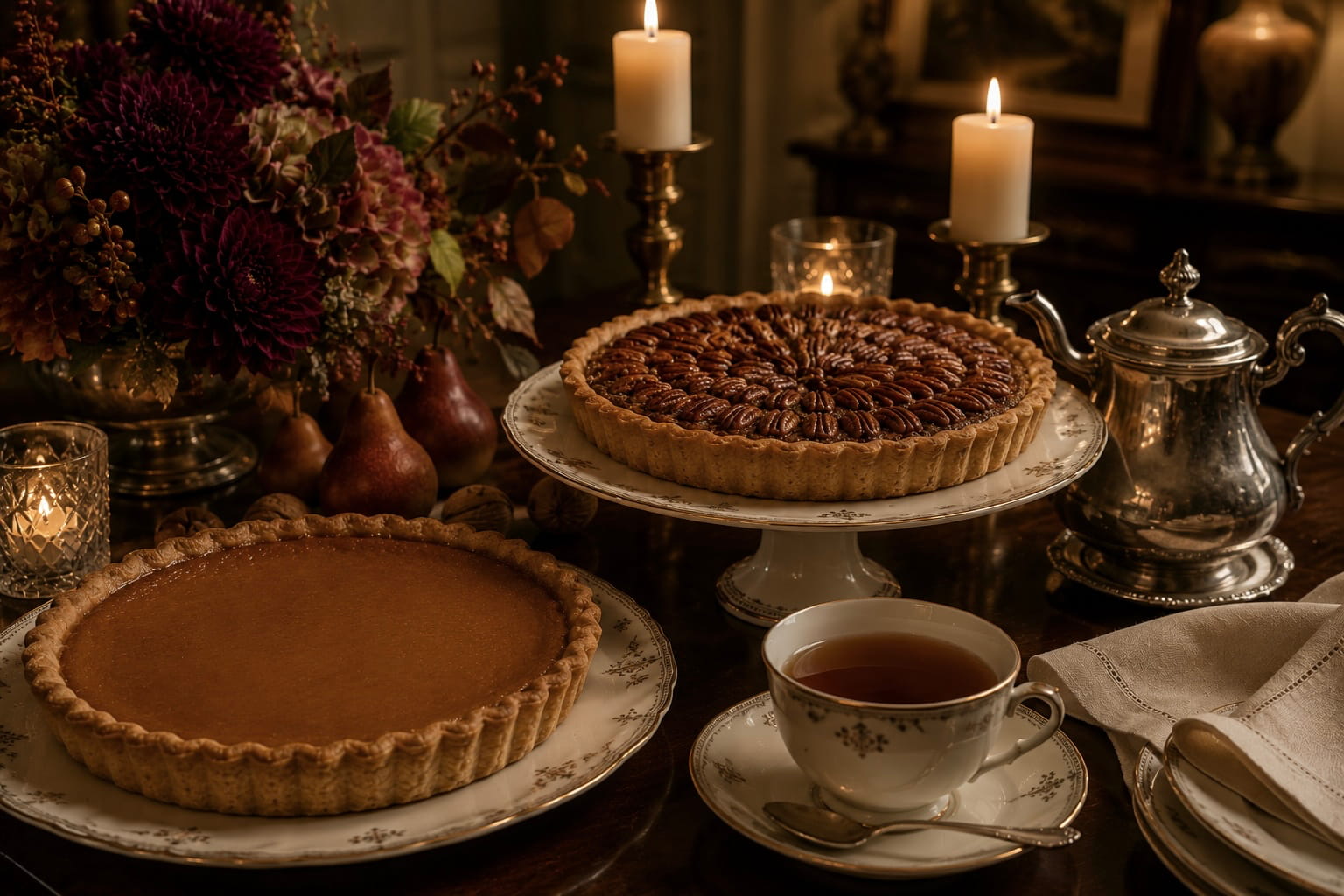
AI generated
A Quiet Moment of Gratitude
Gratitude would be present without becoming a performance. I would not place cards on the table instructing people what to say, nor turn a private feeling into an organised game. Once everyone was seated and the room had grown quiet, I would allow that stillness to remain for a moment.
I might begin by naming something for which I was thankful, perhaps a friendship that had endured or a prayer that had been answered. Anyone who wished could add something of their own; anyone who preferred silence would be free to keep it. True gratitude is not always cheerful or uncomplicated. Sometimes it is simply the recognition that, despite everything a year has contained, something precious has remained.
What I Would Want My Guests to Remember
At the end of the evening, I would have small boxes ready for anyone wishing to take home turkey, stuffing or a slice of tart. Coats would be waiting in the warmly lit hall, and nobody would leave without knowing how glad I was that they had come.
Although I have never celebrated Thanksgiving, it has long held a place in my imagination. When it finally finds a place at my own table, I hope to carry this long-held vision into every detail. Yet I would not want my guests to remember only how the table looked. I would want them to remember being welcomed wholeheartedly, fed generously, listened to with care and relieved, for a few hours, of the need to look after anything themselves.
Once the door had closed behind the final guest, I would clear the table, wash and dry the last glass, wipe away every trace of the meal and return each room to order before going to bed. The following morning, I would wake to a house that was once again immaculate and still, make tea and eat a narrow slice of apple and pecan tart at the table.
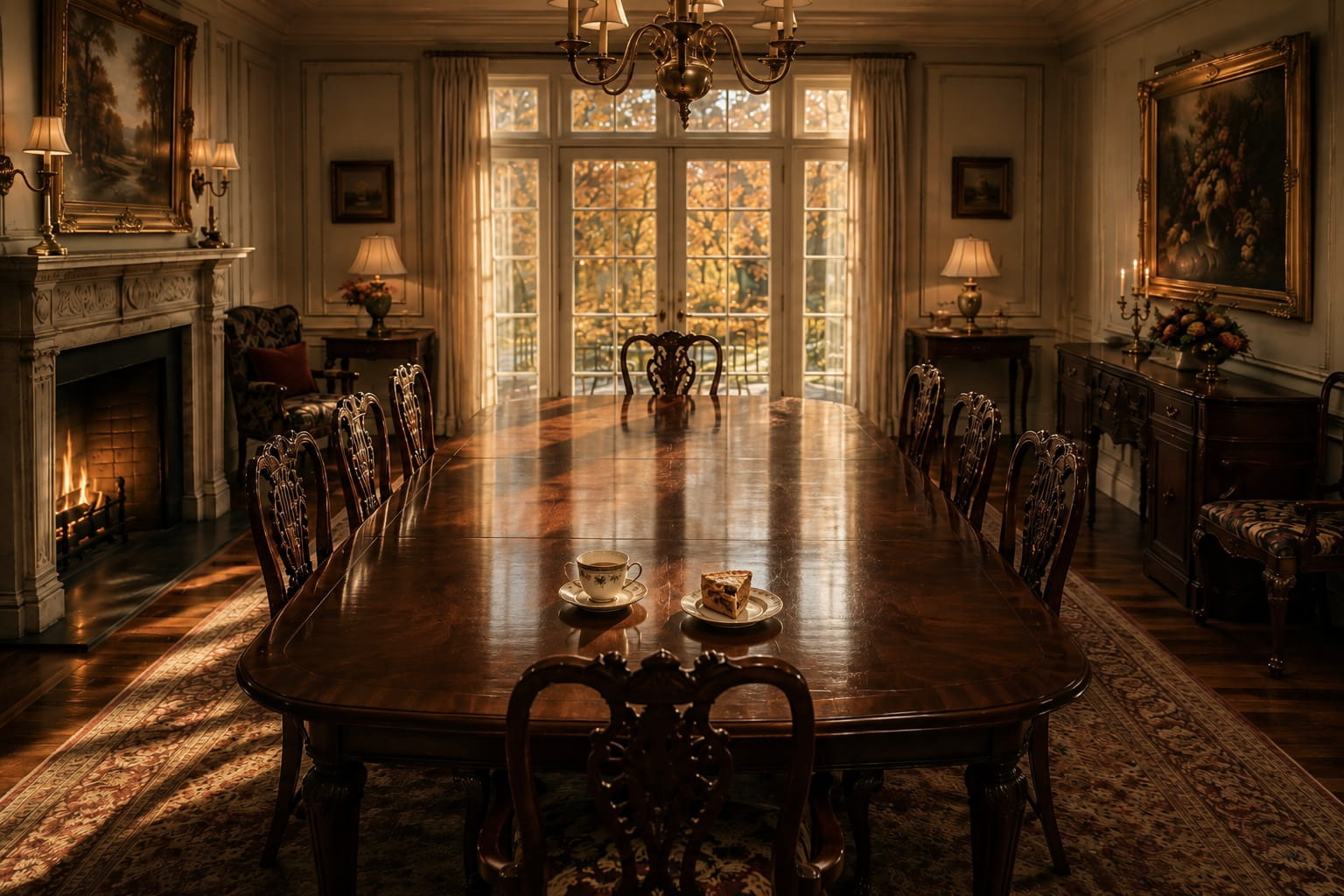
AI generated
In the stillness of that morning, I would feel the particular tenderness of knowing how full of warmth and conversation the house had been only hours before.
The Thanksgiving Table Edit
Advertisement | Amazon affiliate links: Links marked with an asterisk (*) are affiliate links. If a purchase is made through one of these links, I receive a commission. This is at no additional cost to you. As an Amazon Associate I earn from qualifying purchases.
The table imagined throughout this essay depends upon more than decoration. Its character lies in the harmony between the pieces placed upon it and the atmosphere they create together. Inspired by that vision, I have gathered a considered selection on Amazon, with each piece chosen to reflect the same autumnal warmth and quiet refinement.