When Elegance Becomes a Form of Self-Respect
AI generated
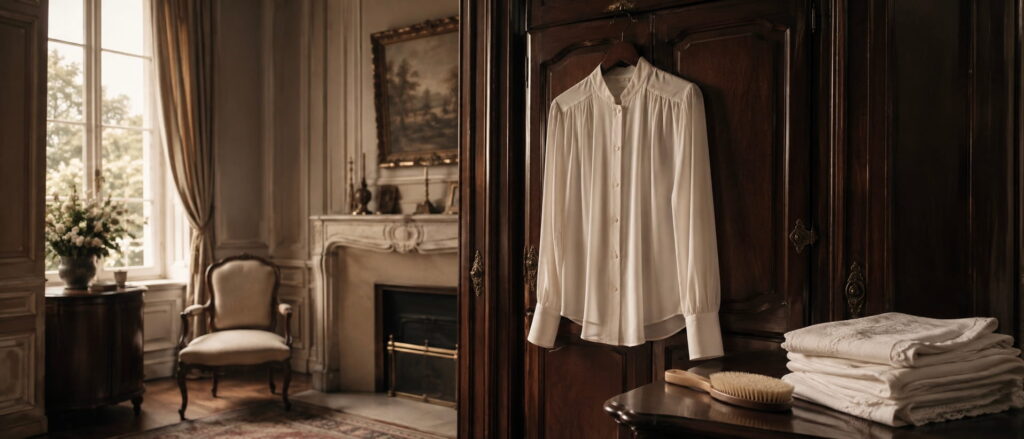
A blouse ironed on a morning when no visitor is expected says more about a woman than a dress worn to a party. The gesture serves no audience. It earns no compliment. And yet somebody, somewhere, is doing exactly this today, smoothing a collar for a day that will be spent entirely at home, because the alternative feels like a small betrayal of something she cannot quite name.
That unnamed thing is self-respect, and elegance has long been one of its quietest expressions.
Not for the Eyes of Others
Much of what passes for elegance today is performance. Clothes are chosen for the photograph, tables are set for the camera, and rooms are arranged with an invisible audience in mind. None of this is elegance. It is presentation, and presentation collapses the moment the audience leaves.
True elegance behaves differently. It persists in an empty room. A woman of true elegance does not dress carefully in order to be seen; she dresses carefully because she will spend the entire day in her own company, and she considers that company worth the effort. The distinction sounds subtle. In practice it changes everything, because it moves the standard from outside to inside, from approval to conviction.
A useful test exists for anyone who wishes to apply it. Consider the habits that survive solitude. The bed made in a house no one will enter. The beautiful cup rather than the chipped one, chosen for a coffee drunk alone. The shoes polished the evening before an unremarkable Tuesday. These acts have no witness and therefore no reward, except one: the quiet certainty of having kept a standard that belongs to oneself.
The Discipline Beneath the Surface
Self-respect of this kind is not vanity. Vanity needs the mirror of other people; it flourishes on attention and starves without it. What is described here needs nothing of the sort. It is closer to discipline, and like all discipline it is mildly inconvenient, which is precisely why it means something.
Ironing takes time. Mending takes patience. Sitting up straight at a table set for one requires a certain resolve. Each of these small efforts represents a decision not to let standards depend on circumstance. The circumstances, after all, will always offer an excuse. No one is coming. It does not matter. Who would know?
AI generated
The elegant answer to that last question has always been the same: I would know.
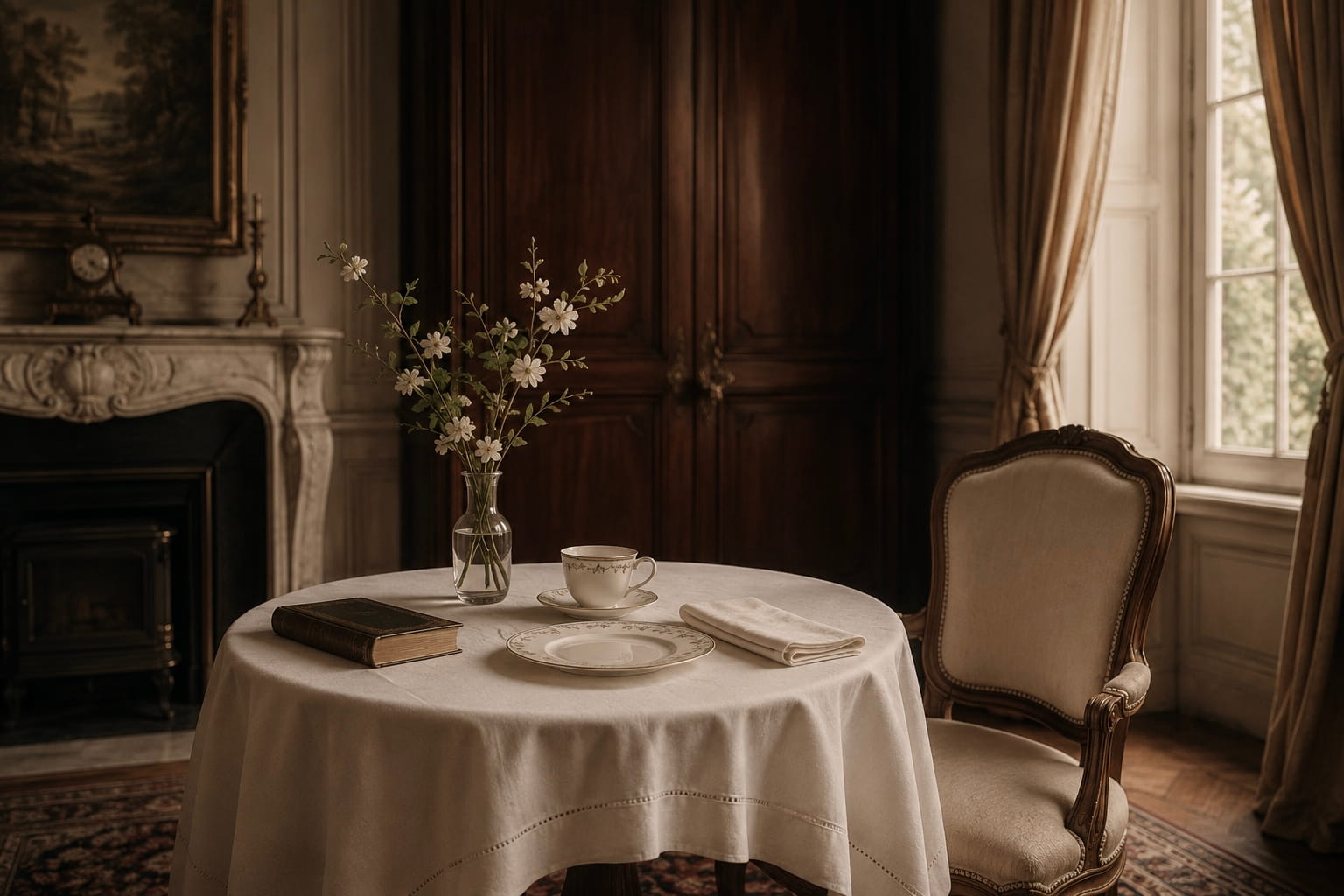
There is a reason such habits were once passed down not only through books or magazines, but above all within families. They were understood as part of a person’s character, not merely as part of her wardrobe. A grandmother who insisted on a pressed tablecloth even for an ordinary supper was not being fussy. She was teaching, without ever needing to say so, that everyday life deserves care, and that the people who share it deserve that care most of all. Traditions of this kind carry weight precisely because they rarely needed many words. They were lived, preserved and passed on.
Care as a Quiet Language
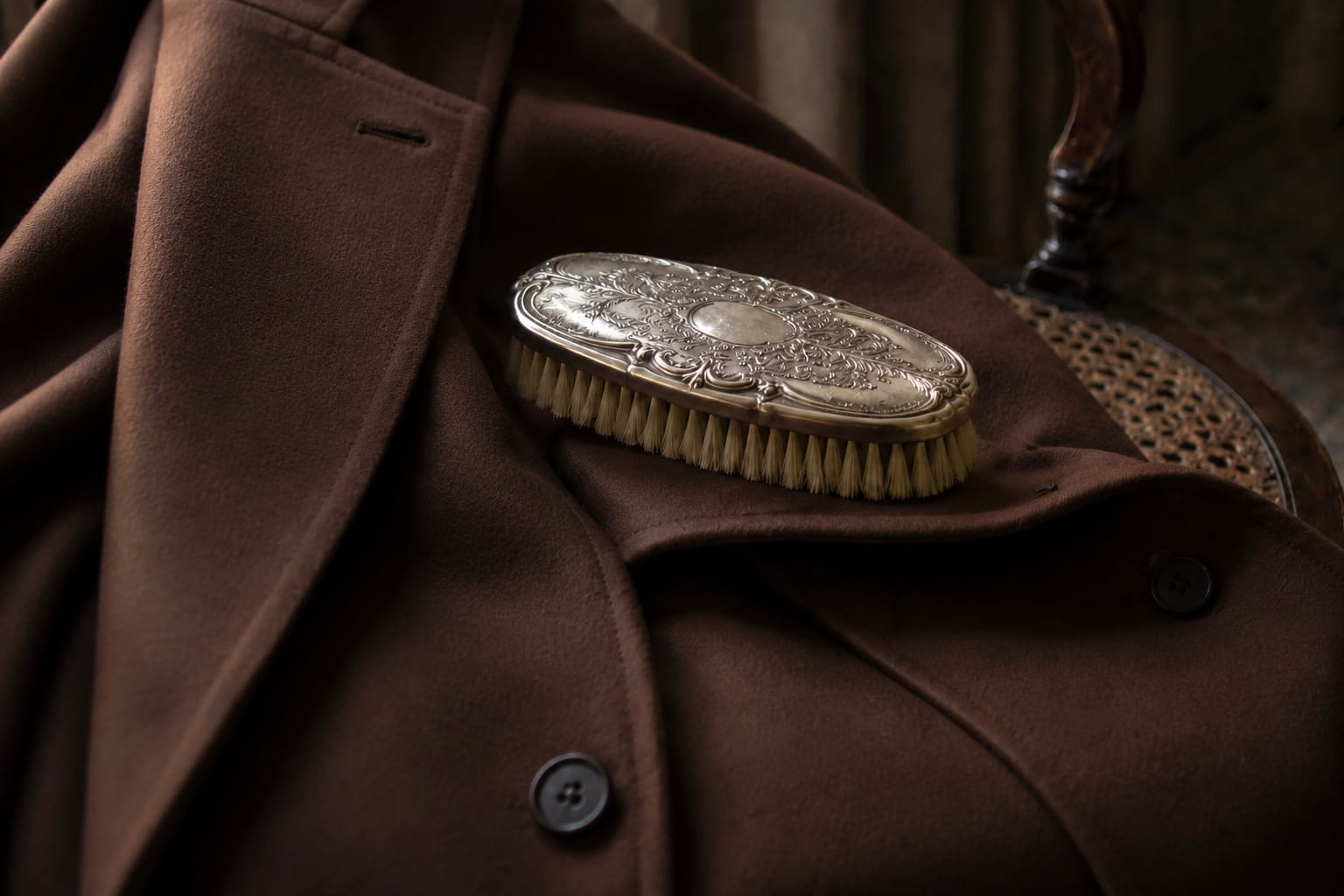
Elegance as self-respect extends beyond the self. It reveals itself in the way a woman cares for what has been entrusted to her. A well-kept coat, worn through many winters and brushed after each wearing, expresses something a new purchase never can. It says that things are not without significance, that effort is not without meaning and, by extension, that the person who makes that effort is not to be regarded lightly either. Such a coat carries more than the marks of passing years. It bears the traces of an attitude. It has not been preserved because it was new, but because it was considered worth preserving.
This is why carelessness, however fashionable it becomes, always carries a faint note of sadness. The creased shirt worn with a shrug, the meal eaten standing over the sink, the room left in disorder because no one is expected: each is a small message to oneself, and the message is that today, and the person living it, did not warrant the trouble.
Reversing that message requires no money and no audience. It requires only the decision to treat one’s own daily life as an occasion. Not a grand occasion, with all the strain the word implies, but a modest and genuine one, the kind marked by a clean table, a considered outfit, and a certain unhurried attention to how things are done. For the way a person attends to the small things gradually shapes the attitude with which they meet the greater demands of life.
A Standard That Cannot Be Taken Away
Perhaps the deepest appeal of this kind of elegance is its independence. Beauty fades, fashion turns, circumstances change, and approval, that most unreliable of currencies, is granted and withdrawn for reasons that rarely have anything to do with merit. An inner standard that holds even in private is immune to all of it. No one awarded it, so no one can revoke it.
AI generated
This explains why the most composed people are so often the least concerned with being noticed. Their bearing does not ask for admiration. It rests upon a standard that does not depend on the judgement of others.
Elegance, in the end, is a promise made in private and kept in private. It is the pressed blouse on the quiet morning, the straight back at the solitary table, the coat brushed with patience and care, then carefully returned to its place. Nobody applauds these things. Nobody needs to. They were never done for applause, and that is exactly what gives them their worth.